In our previous posts, we explored the importance of continuous monitoring on general care floors. But monitoring is not only about technology. It is also about the nurses who make patient care possible every day.
Across the United States, nursing shortages and rising burnout rates continue to place pressure on hospital staff. According to the U.S. Bureau of Labor Statistics, demand for registered nurses is projected to grow significantly over the next decade, with hundreds of thousands of openings expected each year due to workforce shortages and turnover.
Source: U.S. Bureau of Labor Statistics
At the same time, national surveys have shown high levels of stress and burnout among hospital nurses, particularly since the COVID-19 pandemic.
Source: National Council of State Boards of Nursing Workforce Study
The burden of frequent vital sign checks
On general care floors, nurses are responsible for repeated vital sign measurements throughout each shift. For patients requiring frequent blood pressure monitoring, this can mean multiple manual measurements, documentation, and reassessments.
While these checks are essential for patient safety, they also add to workload and interrupt other critical tasks. Repeated cuff inflation can also cause discomfort for patients, particularly during nighttime monitoring.
In busy hospital environments, even small workflow inefficiencies can accumulate into significant strain.
Moving toward smarter blood pressure monitoring
Automated non-invasive blood pressure systems offer an opportunity to support both nurses and patients. By enabling scheduled or repeated measurements without fully manual processes, these systems can:
- Reduce repetitive manual tasks
- Support more consistent monitoring
- Improve patient comfort
- Allow nurses to focus attention where it is most needed
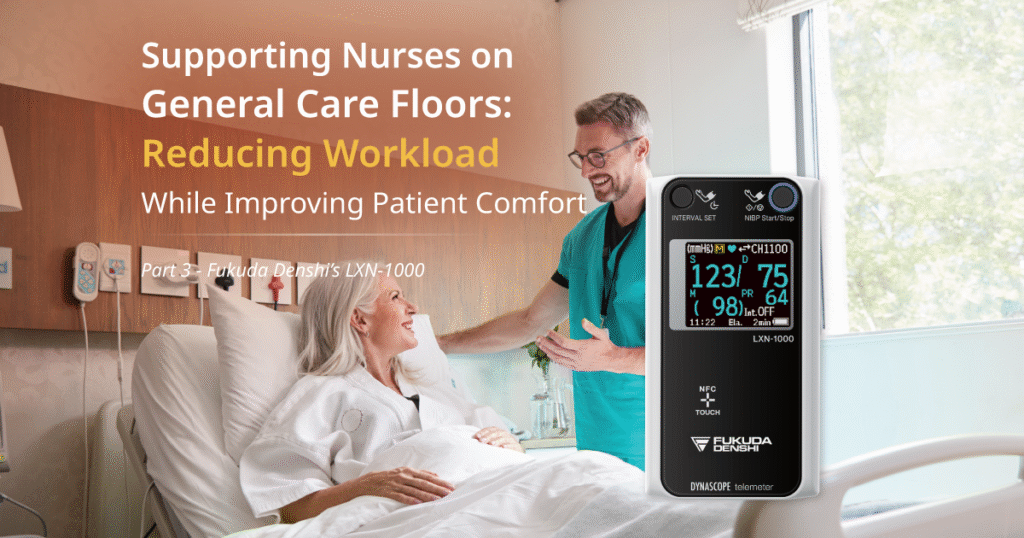
Supporting workflow and comfort with LXN-1000
Fukuda Denshi’s LXN-1000 Non-Invasive Blood Pressure Monitor is designed to support efficient and patient-friendly blood pressure monitoring on general care floors.
When used alongside telemetry systems such as the LX-1300, it contributes to a more integrated monitoring environment. Nurses gain reliable access to vital sign data while reducing unnecessary interruptions and repetitive tasks.
As hospitals continue to address staffing challenges and prioritize patient-centered care, solutions that support workflow efficiency and comfort are becoming increasingly important.
Improving patient monitoring is not only about detecting deterioration. It is also about supporting the clinicians who deliver care every day.
—————
Learn more about the LXN-1000 Non-Invasive Blood Pressure Monitor.
For more information, contact us at 1-800-365-6668 or [email protected]. You can also reach out to us through Contact Form.