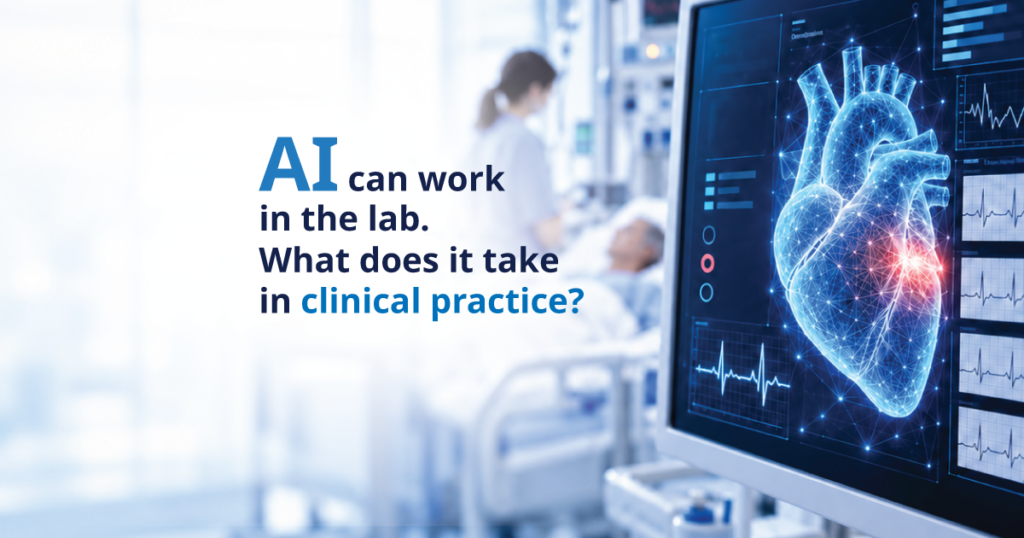
AI-ECG research has generated impressive results in academic settings. But the distance between a research finding and a clinically deployable tool is significant — and navigating that distance involves regulatory pathways, clinical workflow considerations, and the practical realities of how ECG equipment is actually used in healthcare settings.
Understanding what that journey looks like is part of what makes AI-ECG a complex — and genuinely interesting — area to follow.
The Regulatory Landscape for AI-ECG
In the United States, AI-based ECG interpretation software is subject to FDA oversight. Software that meets the definition of a medical device — including software that analyzes ECG data to support clinical decisions — requires FDA clearance or approval before it can be marketed for clinical use. The regulatory pathway (typically 510(k) clearance for AI-ECG tools) requires demonstration of safety and substantial equivalence to a predicate device.
In Japan, AI-enabled medical devices undergo review by the Pharmaceuticals and Medical Devices Agency (PMDA) under a regulatory framework that has evolved to accommodate software as a medical device (SaMD). This has enabled Japanese manufacturers and research institutions to bring AI-based diagnostic tools through a defined approval process — a pathway that continues to mature as the clinical evidence base for AI-ECG grows.
Fukuda Denshi’s AI-ECG Research
Fukuda Denshi has been an active participant in AI-ECG research. A 2024 study published in PMC — co-authored by researchers from Fukuda Denshi’s Development Headquarters — described the development and validation of a deep learning-based edge AI model designed to detect atrial fibrillation risk during normal sinus rhythm from standard 12-lead ECGs. The model was trained on data collected with Fukuda Denshi ECG equipment through a project supported by Japan’s Agency for Medical Research and Development (AMED).
The study is notable for its practical implementation approach — an edge AI model deployed on the ECG device itself, rather than requiring cloud-based processing. This kind of on-device AI is relevant to real-world clinical environments where connectivity may be limited or where low-latency results matter. The research reflects Fukuda Denshi’s investment in understanding how AI can be integrated into the ECG workflow in ways that are clinically practical.
Clinical Settings Where AI-ECG Is Being Applied
The clinical contexts where AI-ECG is generating the most discussion include health screenings and preventive care, where the volume of ECGs recorded makes automated analysis practically valuable; primary care settings, where access to specialist ECG interpretation may be limited; and stroke prevention programs, where atrial fibrillation screening is increasingly recognized as an important element of risk management.
In each of these settings, the quality of the underlying ECG data is foundational. An AI model is only as useful as the data it receives — which means that accurate, reliable ECG acquisition remains the starting point for any AI-based analysis.
The Workflow and Accountability Questions
Even as AI-ECG tools advance technically, clinical adoption involves questions that go beyond performance metrics. How does an AI-generated interpretation integrate into existing documentation workflows? Who is accountable for a clinical decision that incorporates AI output? How do clinicians build appropriate understanding of what an AI model can and cannot reliably detect?
These questions are not obstacles to AI-ECG — they are the practical work of responsible implementation. The healthcare institutions, manufacturers, and regulators actively working through them are shaping what AI-ECG looks like as a clinical tool, not just as a research finding.
Fukuda Denshi’s diagnostic cardiology solutions are designed with clinical environments in mind — providing the reliable, high-quality ECG data that both human readers and AI-based systems depend on.
—————
Learn more about Fukuda Denshi’s diagnostic cardiology solutions.
For more information, contact us at 1-800-365-6668 or [email protected]. You can also reach out to us through our Contact Form.