As discussed in Part 1, cardiac disease is becoming an increasingly important focus in U.S. veterinary medicine, driven in part by the aging pet population.
Conditions such as mitral valve disease, dilated cardiomyopathy, and hypertrophic cardiomyopathy are associated with arrhythmias and potential sudden deterioration. In hospitalized or perioperative patients, these rhythm disturbances may not always be predictable.
The American College of Veterinary Internal Medicine (ACVIM) has published consensus guidance emphasizing the importance of cardiac monitoring in dogs and cats with structural heart disease.
Source: American College of Veterinary Internal Medicine (ACVIM)
In addition, perioperative monitoring guidelines in veterinary medicine emphasize the importance of continuous ECG monitoring during anesthesia and recovery to detect rhythm abnormalities early.
Source: American College of Veterinary Anesthesia and Analgesia (ACVAA) Monitoring Guidelines
The limitations of intermittent monitoring
Spot ECG checks or periodic assessments may identify overt abnormalities, but transient arrhythmias can occur between evaluations. In cardiac patients, especially during recovery or times of stress, early detection can influence clinical decision-making and intervention timing.
Continuous ECG monitoring allows clinicians to:
- Detect arrhythmias in real time
- Observe trends rather than isolated readings
- Improve safety during anesthesia recovery
- Support proactive rather than reactive care
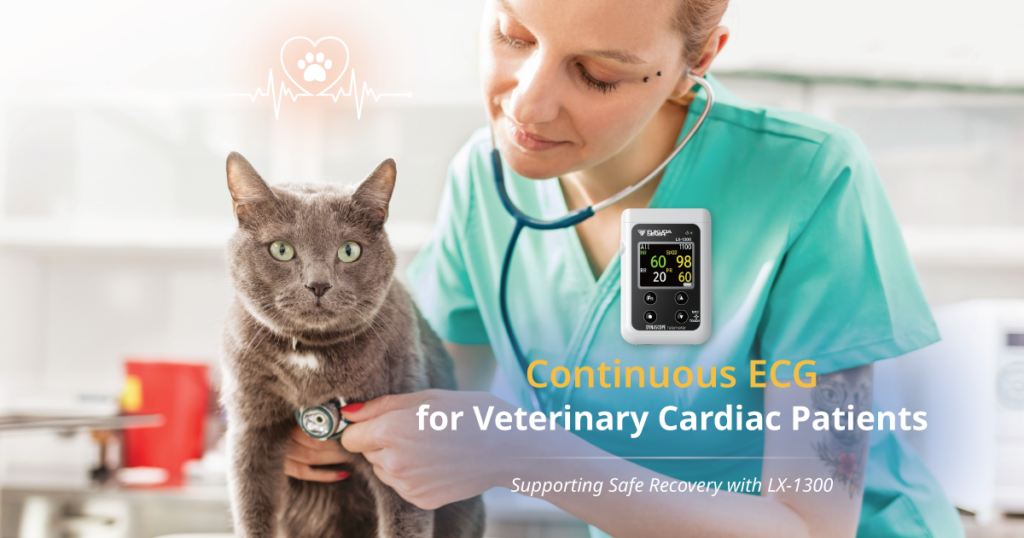
Supporting veterinary cardiac care with LX-1300
Wireless telemetry solutions such as Fukuda Denshi’s LX-1300 provide continuous ECG monitoring while allowing greater patient mobility.
In veterinary settings, minimizing unnecessary restraint is particularly important. Continuous wireless monitoring enables cardiac observation without restricting natural movement, helping support recovery while maintaining clinical visibility.
As cardiac disease prevalence increases in aging pets, monitoring solutions must evolve to meet the growing need for safer, more consistent ECG oversight.
In Part 3 of this series, we will explore how reducing stress and supporting natural recovery behavior further enhances outcomes in veterinary cardiac patients.
—————
Learn more about the LX-1300 Telemetry Transmitter.
For more information, contact us at 1-800-365-6668 or [email protected]. You can also reach out to us through Contact Form.