A new building. Double the production floor space. Collaborative robots working alongside human hands. And a philosophy that holds every single person on the manufacturing floor personally accountable for the quality of devices that will, someday, end up in a hospital room where someone’s life is at stake.
This is Fukuda Denshi’s Shiroi Plant in Chiba Prefecture — the company’s primary domestic manufacturing facility since 1973. In this interview from the FUKUDA BEAT series, Executive Officer and Head of Production Toyoharu Kanda shares the thinking behind Fukuda Denshi’s manufacturing reform: what automation, in-house production, and grassroots digitalization actually look like on the floor, and why the phrase SHIROI QUALITY is more than a slogan.
Three Pillars: Automation, In-House Production, and Digitalization
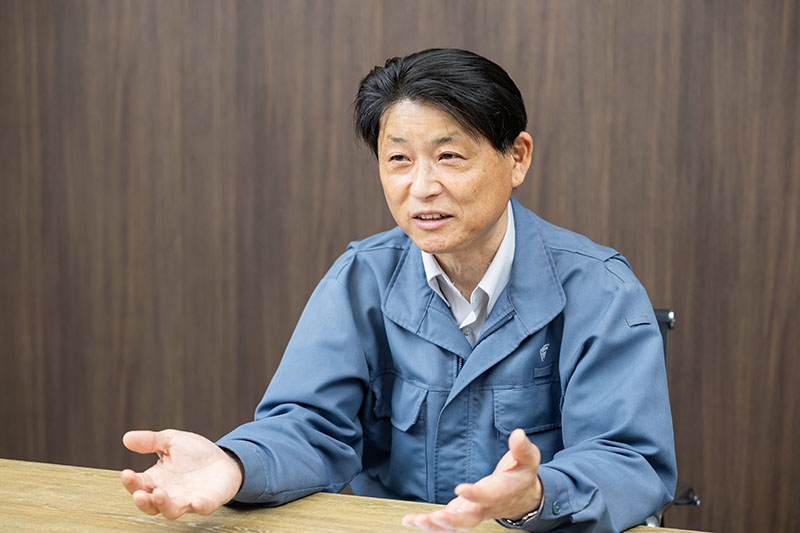
Kanda frames the production division’s current focus around three areas. Automation — particularly in inspection processes where human error is a risk and precision is non-negotiable. Collaborative robots, which can work safely alongside people (slowing and stopping on contact), are being deployed to handle and operate equipment, while image processing systems take over visual judgments. The goal is not to remove people from the process, but to put human skill where it creates the most value.
In-house production began with key components for the company’s core products — ECG systems and oxygen concentrators — and has expanded to include the AED, Fukuda Denshi’s first domestically produced defibrillator. Bringing component manufacturing in-house has allowed the team to add quality and performance improvements that were not possible when relying on outside suppliers — and has built engineering knowledge within the workforce.
Digitalization is the third pillar — and the one Kanda describes as requiring the most patience. Rather than expensive top-down system overhauls, the Shiroi Plant has taken a “grassroots DX” approach: identifying tasks that can be digitized or automated within existing software tools, and building up from there. “This kind of bottom-up approach,” Kanda says, “is what ultimately builds a system that actually matches what the floor needs.”
Overlapping Circles: The Accountability Philosophy
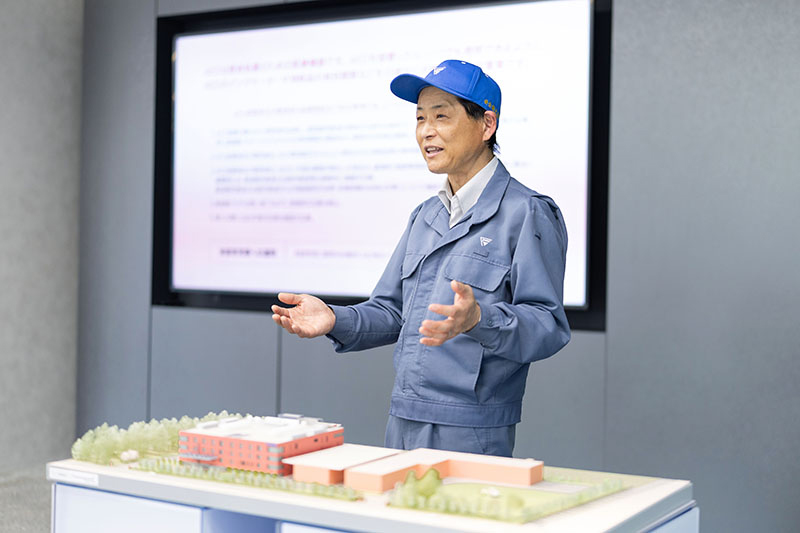
When Kanda talks about what it takes to produce medical devices at the required quality level, he comes back to a specific mental model. “Defects often originate in the gaps between departments — in the space where one team’s work ends and another’s begins.” People naturally define the boundaries of their own role and stay within them. But in a manufacturing process where every step connects to produce a single device, those gaps are where problems develop.
His solution is what he calls expanding one’s circle. Rather than defining a rigid boundary around one’s role, each person is encouraged to look slightly beyond it — into the work of adjacent teams, the steps that come before and after. When circles overlap, gaps disappear. “Just widening your scope a little changes everything,” he says.
He points to a concrete example: during the COVID-19 pandemic, the Shiroi Plant took on the development of an air purification and deodorization device — a product the facility had no prior experience building. The initial reaction was skepticism. Kanda’s message to the team was direct: “Passive won’t work here. Think of it as your own problem and move.” They did — and brought the product to market in approximately one year. “That experience changed the people involved,” he says. “You could see it.”
The New Building: Designed by the People Who Work There
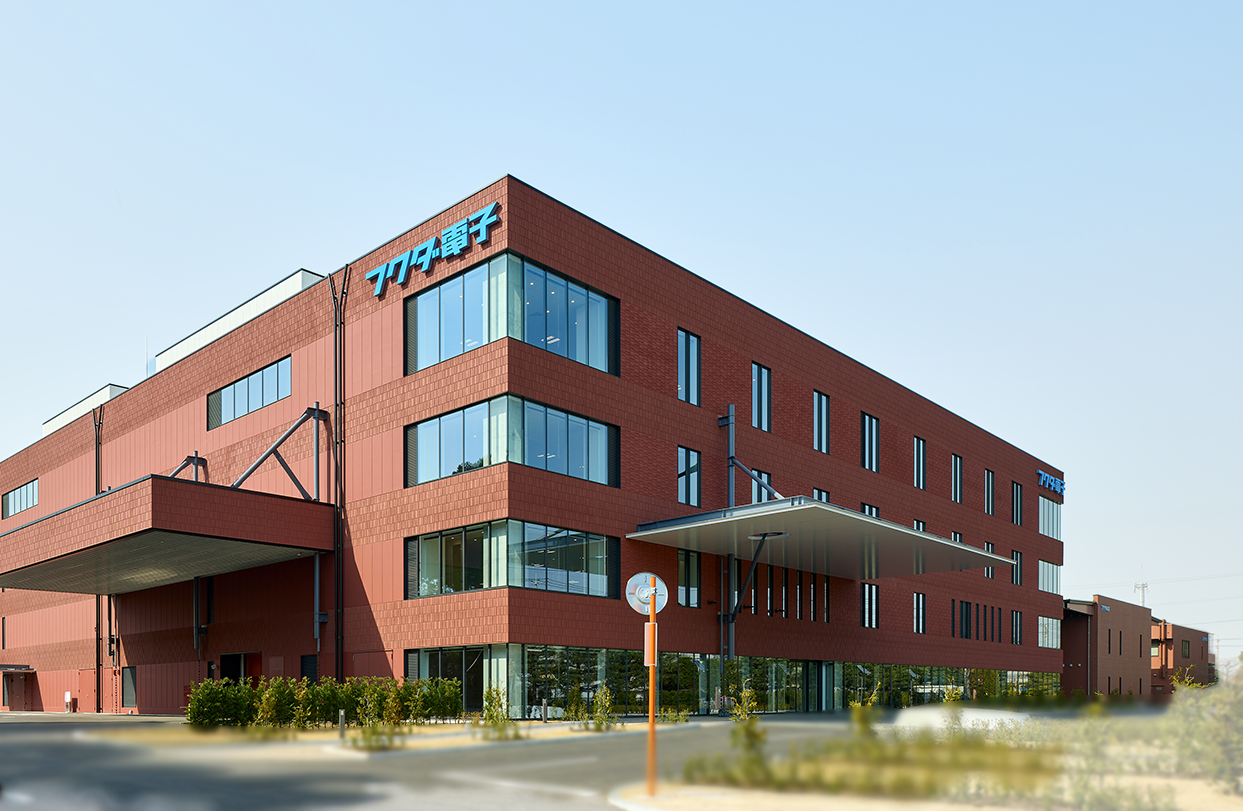
In May 2025, the Shiroi Plant’s new building became fully operational. Production floor space doubled. The environment for manufacturing precision medical devices was significantly upgraded. And critically, the design reflected feedback from the people on the floor: challenges that had accumulated over years in the old facility were documented, addressed, and incorporated into the new building’s layout before construction was finalized.
The new building produces ECG systems, patient monitors, blood pressure pulse wave examination devices, oxygen concentrators, and AEDs. The capacity increase is significant: with double the production space, doubling output is now feasible.
Sustainability: Rethinking How Long Parts Last
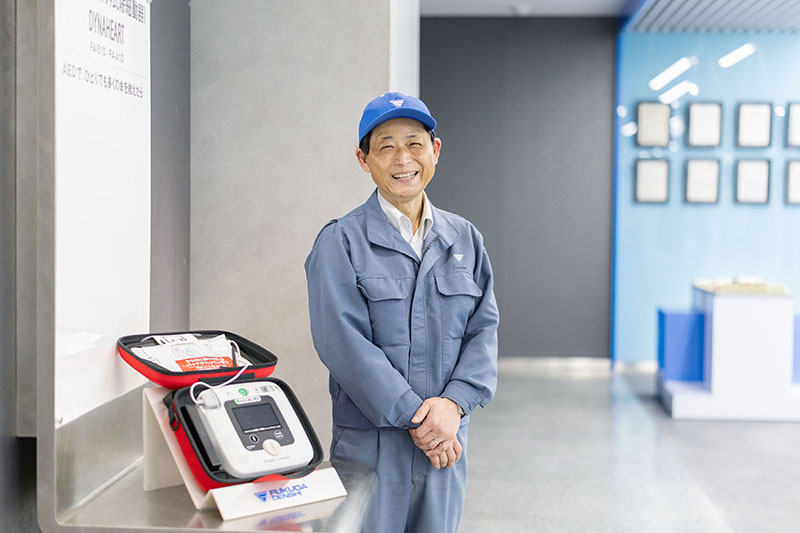
One of the more concrete sustainable manufacturing initiatives Kanda describes involves oxygen concentrators used in home oxygen therapy. The devices are rented to patients and had traditionally been overhauled and discarded on a fixed cycle — regardless of whether individual components had actually reached the end of their useful life.
Supply chain pressure during COVID-19 forced a rethink. When imported key components became difficult to source, the team examined what could be extended, reused, or made in-house. The result: a revision to the reuse guidelines that allows components to be evaluated individually rather than replaced en masse — with some parts now lasting twice as long as before, without compromising quality standards. “This contributed to the business as well,” Kanda notes matter-of-factly.
SHIROI QUALITY: Pride in the Work Itself
The SHIROI QUALITY initiative runs through everything Kanda describes — but his framing of it is grounded and practical. In an era when efficiency is the dominant pressure across all industries, medical device manufacturing, he argues, cannot simply optimize for speed and cost. “The role of management,” he says, “is to ensure people take pride in doing work that, even at the cost of extra care and effort, produces something better — something useful to the medical professionals who use it, and beneficial to the patients they serve.”
The development of Fukuda Denshi’s first domestically produced AED is the clearest example of that accountability in action. “Everyone on the assembly and inspection line thinks about what happens when an AED malfunctions,” Kanda says. “That awareness sharpens the work.” The experience of building a life-saving device from scratch created a measurable shift in how people on the floor approach their daily responsibilities.
“Here Until the End” — Fukuda Denshi’s Role in the Medical Manufacturing Ecosystem
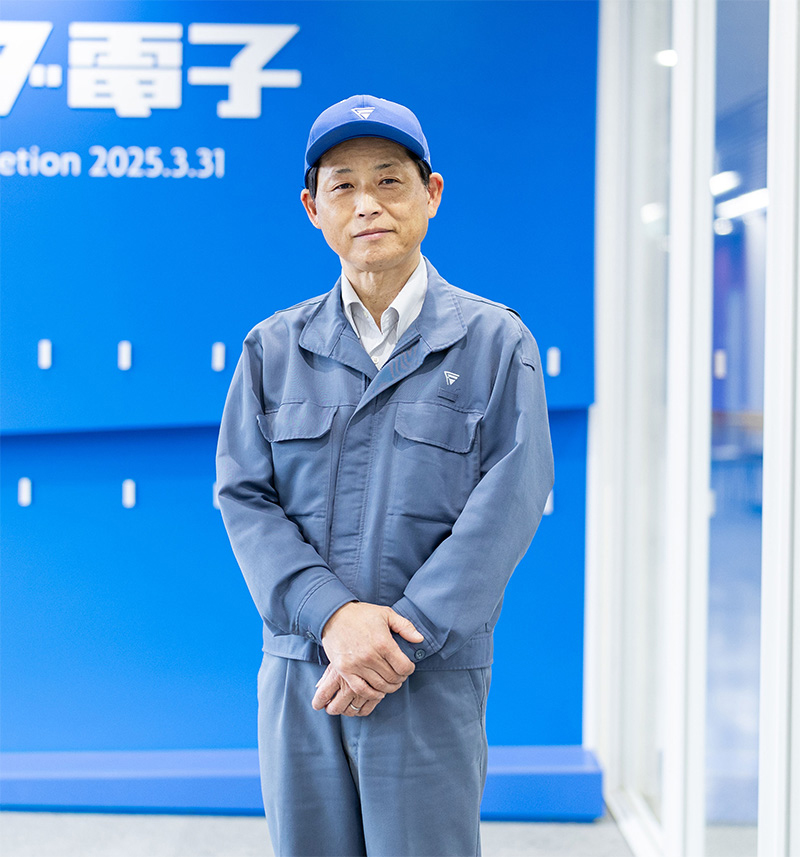
Kanda closes with a vision that reaches beyond the walls of the Shiroi Plant. Medical device manufacturing, he points out, involves a large ecosystem of suppliers and partners arranged in a pyramid structure. When a manufacturer at the top of that pyramid pursues quality and growth, the benefit flows down through the entire supply chain. “Our goal is to be a company that energizes that whole pyramid — and contributes to making Japan’s manufacturing sector stronger.”
His personal slogan for the Shiroi Plant captures the ambition directly: “Are you serious, Fukuda Denshi?” — a challenge to keep pushing into territory that would have seemed impossible before.
Read the full interview on the Fukuda Denshi FUKUDA BEAT website (Japanese).
—————
Learn more about Fukuda Denshi USA at fukudaamerica.com.