Since developing Japan’s first domestically produced electrocardiograph, Fukuda Denshi has pursued a single, consistent question: what more can medical devices do? That spirit of inquiry has driven nearly 90 years of R&D and manufacturing — and it continues to shape the company’s direction today.
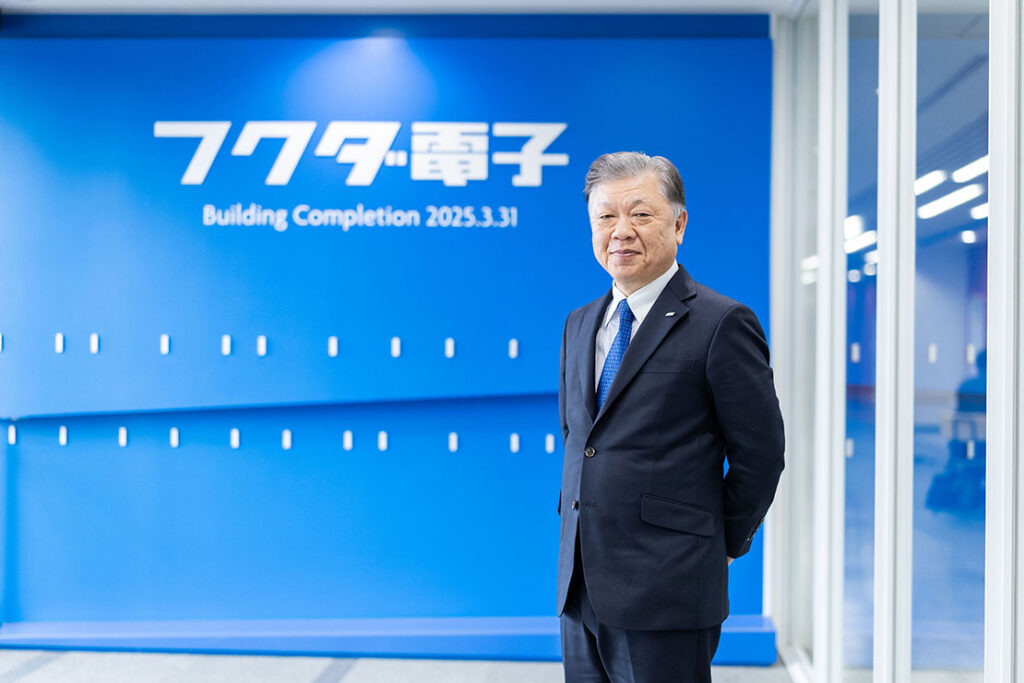
In this interview from Fukuda Denshi’s FUKUDA BEAT series, Managing Director Haruo Ogawa — who oversees technology across the company — shares his perspective on customer-centered product development, the lessons of the pandemic, AI in medical devices, and the philosophy behind “SHIROI QUALITY”: a companywide manufacturing reform initiative rooted in quality, pride, and purpose.
Start with the Customer, Not the Technology
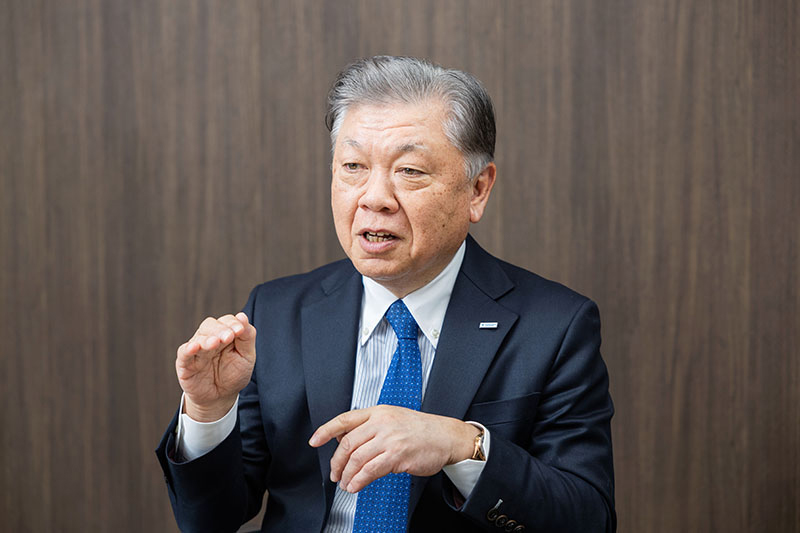
Ogawa joined Fukuda Denshi in 2020 after a 38-year career at Olympus, where he worked across production engineering, R&D, and eventually served as President of Olympus Imaging and CTO of Olympus Corporation. One of the formative experiences he brings to Fukuda Denshi is a lesson about the cost of technology-first thinking.
Early in his career at Olympus, he developed a concept for a capsule endoscope. At the time, the idea didn’t gain traction internally — the conventional wisdom held that stomach and colon endoscopy through a capsule was impractical. In 2001, an Israeli company launched a capsule endoscope for small intestine diagnostics and built a global business. Olympus, despite having the underlying technology, lost more than two years to a competitor because the team had overlooked a genuine clinical need.
“No matter how high-performance or technically advanced a product is, if the market doesn’t accept it, it has no value,” Ogawa says. “R&D exists for the people who use the product. Thinking in backcasting terms — imagining 10 or 20 years ahead and working backward — is what matters.” He calls this approach “marketing-driven R&D,” and it is the foundation of how he approaches product development at Fukuda Denshi.
The Pandemic as a Turning Point
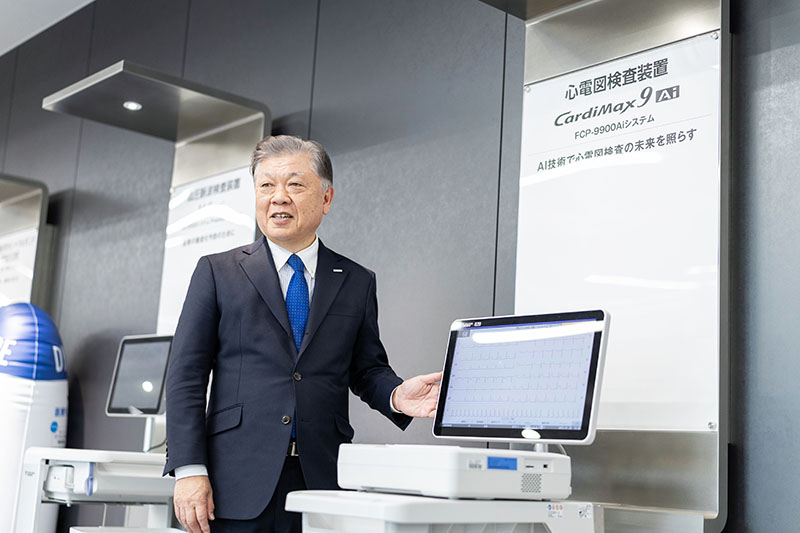
When Ogawa joined Fukuda Denshi in May 2020, the COVID-19 pandemic was reshaping hospital systems across Japan. Fukuda Denshi — a manufacturer of cardiovascular and respiratory medical devices — found itself at the center of the national response. The government requested support securing medical equipment for oxygen stations treating patients waiting for hospital admission. “I felt viscerally that this company is indispensable to protecting healthcare in Japan,” Ogawa says.
The pandemic also exposed a structural vulnerability: like many Japanese medical device manufacturers, Fukuda Denshi sourced critical components and semiconductors from overseas, and supply chains fractured under the pressure. Rather than treating this as a crisis to survive, Ogawa saw it as an opportunity. The disruption forced the company to build new in-house manufacturing capabilities — starting with key components for oxygen concentrators. The in-house development process didn’t just restore supply security. It produced components that were quieter and more reliable than the imported parts they replaced, improving both product quality and cost. The experience built engineering process skills within the team and led directly to the development of two new products — an air purification and deodorization device, and a simplified negative pressure booth — both of which served as clinical access points for the sales team during a period when hospital visits were restricted.
AI in ECG: Meeting an Unmet Clinical Need
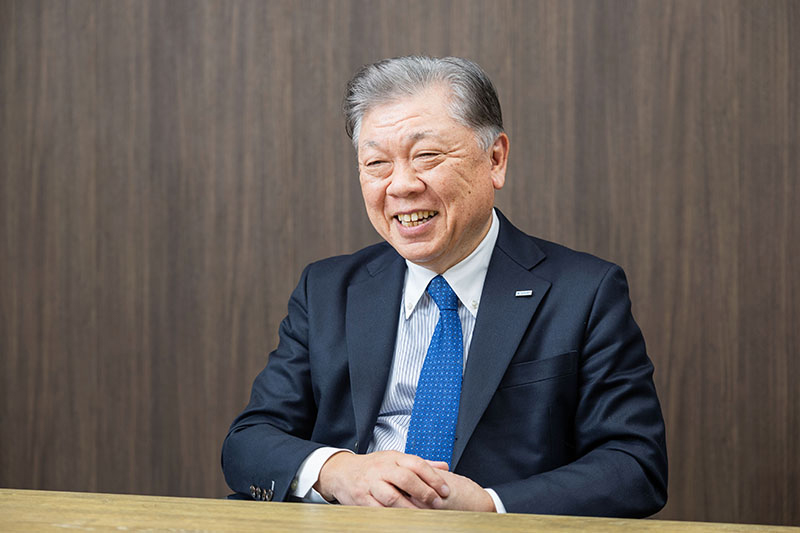
In October 2024, Fukuda Denshi launched an ECG system with AI analysis capability — the product of approximately four years of joint development with a university research partner. The clinical problem it addresses is paroxysmal atrial fibrillation (PAF): AF that occurs intermittently and is often missed by routine ECG because the heart happens to be in normal rhythm at the time of recording.
While AI had already been applied in imaging-based diagnostics like ultrasound and endoscopy, applying AI to ECG waveform analysis was a first in Japan. The system estimates PAF risk directly on the device — no cloud processing required — and also reduces the time required for analysis. “Our strength is in the software and algorithms for accurately reading ECG waveforms,” Ogawa explains. “Applying AI to that — bringing it into a domain that is foundational to who we are as a company — required a genuine shift in thinking. But our development team committed to it, and that’s what made it possible.”
On AI more broadly, Ogawa’s view is grounded: “AI is spreading rapidly in clinical settings, but we should not be swept up in it. AI should be a means to solving unmet needs — not the goal itself. That philosophy is what I want at the root of Fukuda Denshi’s technological innovation.”
SHIROI QUALITY: What It Means to Build Medical Devices

Fukuda Denshi’s primary manufacturing site is the Shiroi Plant in Shiroi City, Chiba Prefecture — and it has become the symbolic home of the company’s manufacturing reform initiative: SHIROI QUALITY.
The initiative is built around three keywords: “mastery,” “raising intensity,” and “the pride of making the best.” These are not slogans. They reflect what Ogawa believes must be the mindset of every person involved in manufacturing devices that people’s lives depend on. “Medical devices entrust you with human lives,” he says. “These three elements are indispensable for everyone who makes them.”
The organizational model Ogawa describes is a “flowing pool” — not a rigid hierarchy directing everyone in the same formation, but a system where individuals set their own goals in service of a shared direction, gradually aligning into a current that carries the whole organization forward. “Once a flow forms toward the same goal, you don’t need enormous force. People move with it.”
To support this, Fukuda Denshi introduced a recognition program in 2025 in which employees who achieve the goals they set for themselves on personal task sheets are formally acknowledged. The intent is for this kind of autonomous accountability to become embedded in the company’s culture — one element of building that flowing pool.
Building Medical Devices That Matter
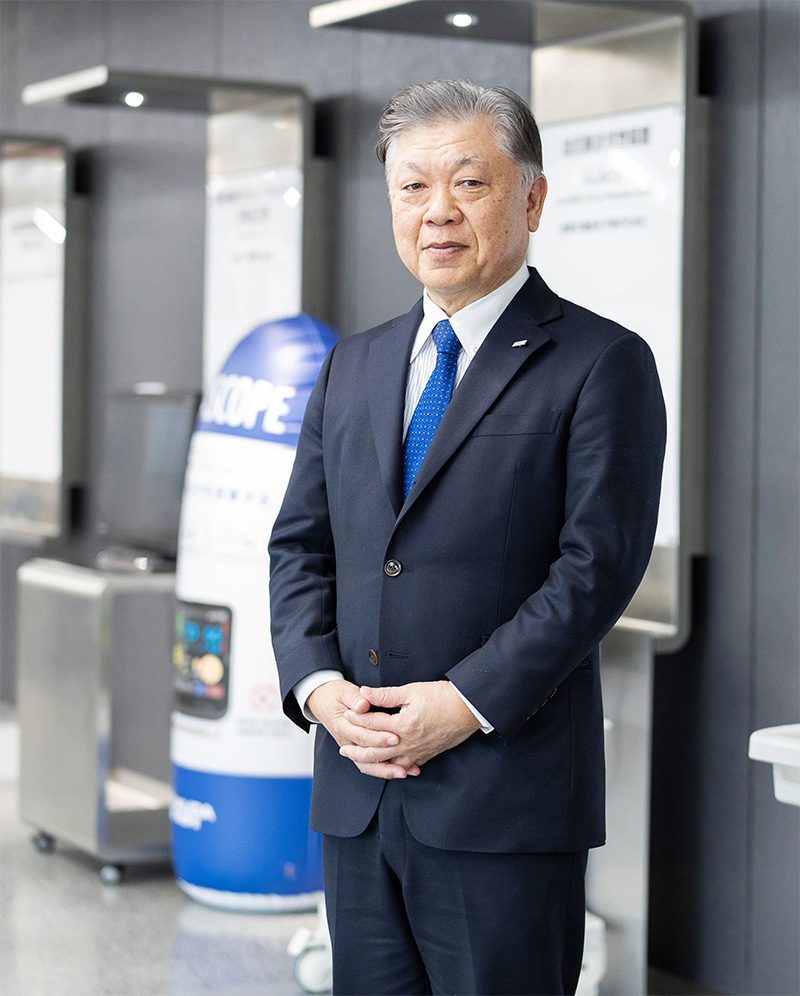
Ogawa’s vision for Fukuda Denshi extends beyond its traditional diagnostic focus. The company’s mission, as he frames it, is “detecting disease early through assessment, and delivering appropriate treatment.” That framing drove the company’s development of its first domestically produced AED, launched in 2025 — designed around the concept of a device that anyone, anywhere, at any time, can use.
“Most AEDs in Japan are imported,” Ogawa notes. “We pursued a design optimized for Japanese users.” It is one expression of the broader ambition: a company that does not just measure and monitor, but contributes directly to saving lives.
On the people side, Ogawa’s priority is developing what he calls “innovation talent” — people who observe sharply, question small changes, connect disparate technologies into new value, and try things without fear of failure. “That is my mission,” he says, “and the greatest contribution I can make to Fukuda Denshi.”
Read the full interview on the Fukuda Denshi FUKUDA BEAT website (Japanese).
—————
Learn more about Fukuda Denshi USA at fukudaamerica.com.